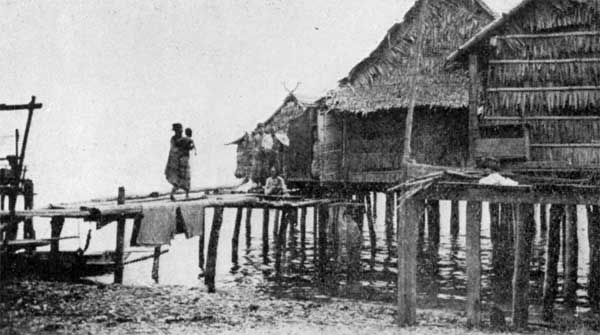
For over a thousand years, the Bajau people of Southeast Asia have lived mostly at sea, moving between the waters of Indonesia, Malaysia, and the Philippines in houseboats, gathering food by freediving with nothing but a set of weights and wooden goggles.
Some spend up to five hours a day underwater.
Divers routinely descend past 60 metres and hold their breath for several minutes at a time, in a range most people could never approach even with training.
That has always been treated as a story about skill and lifestyle. Then, in 2018, a team led by geneticist Melissa Ilardo set out to test whether any of it was written into the Bajau’s biology itself, rather than just trained into it.
The team compared the Bajau to a nearby population, the Saluan, who share a similar environment but don’t dive for a living. The finding was striking. Bajau spleens were significantly larger than the Saluan’s, and the difference held even among Bajau who don’t dive. That detail matters because it meant this wasn’t a body adapting to a lifestyle through training. It was something the Bajau were already carrying, genetically, before they ever entered the water.
The spleen turns out to be the key organ here.
In diving mammals, it contracts during a dive, releasing a reserve of oxygen-rich red blood cells into circulation, buying extra time underwater. The researchers traced the Bajau’s enlarged spleens to variation in a gene called PDE10A, which appears to influence thyroid hormone levels known to regulate spleen size.
They also found evidence of selection on a second gene, BDKRB2, linked to the body’s diving reflex, the automatic narrowing of blood vessels in the limbs that redirects oxygen toward vital organs during breath holding. Put together, the Bajau seem to carry a genuine, inherited physiological toolkit for life underwater.
Both of those genes point toward the same organ, even though, well, neither one sits inside it. The dive reflex exists to protect the two structures that can least afford to run out of oxygen, the heart and the brain.
When BDKRB2 tightens blood vessels in the arms and legs, it’s rerouting blood toward the brain specifically, the organ most vulnerable to hypoxia and the one whose damage is hardest to reverse. The reflex itself is coordinated by circuits in the brainstem, which means the apparatus doing the redirecting sits inside the very organ it evolved to protect.
It’s one of the clearest documented cases we have of a population evolving a specific, measurable adaptation to a specific way of life, and it has real medical relevance.
Beyond Curiosity
Understanding how the body naturally tolerates low oxygen has direct implications for treating acute hypoxia in emergency and critical care medicine, including the neuroprotective strategies used when the brain itself is starved of oxygen after a stroke or cardiac arrest, situations where every minute of unprotected hypoxia costs measurable brain tissue.
A population that has spent a thousand years surviving repeated, voluntary bouts of exactly that stress is, in effect, a natural experiment in the same question critical care medicine is still trying to solve artificially.
Many stories like this never get found
The Bajau’s variant was only discoverable because someone chose to sequence their genomes in the first place. Most of the world hasn’t had that chance.
The GWAS Catalog, one of the largest public repositories of genomic association data, is still roughly 95 percent European ancestry, even though people of European ancestry make up less than 9 percent of the world’s population.
It means population-specific variants, protective or otherwise, in African, Asian, Latin American, and Indigenous populations are largely invisible to the reference data modern medicine is built on. Simply because the sequencing was never done.
Most of the world still waiting for a desicion to be made about them. Inclusion
Further reading
Ilardo, M.A., Moltke, I., Korneliussen, T.S., et al. (2018). Physiological and Genetic Adaptations to Diving in Sea Nomads. Cell, 173(3), 569–580. https://doi.org/10.1016/j.cell.2018.03.054
Petrovski, S. & Goldstein, D.B. (2016). Unequal representation of genetic variation across ancestry groups creates healthcare inequality in the application of precision medicine. Genome Biology, 17, 157.
Notes
Banner photo: A Sama-Bajau village in Pulau Omadal, Sabah, Malaysia, by Tom Gunnar Hoogervorst (2012), CC BY 3.0, via Wikimedia Commons.